
Conservative Dentistry: Why Preserving Your Natural Teeth Matters

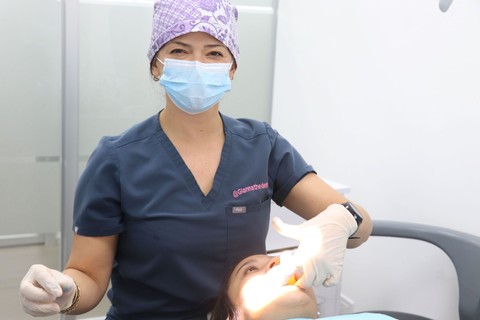
Last week, I had the opportunity to attend the Ivoclar Symposium in Bogotá. Beyond the academic program, it was great to reconnect with fellow Panamanian dentists, colleagues I know from Medellín, and new professionals from Bogotá.
One of the things I value most about attending these events is seeing how dentistry continues to evolve. We learn from colleagues, challenge the way we work, and discover how new materials and techniques can help us achieve better results for our patients.
One message from the symposium particularly resonated with me:
Modern dentistry is becoming more conservative.
And I believe that is a very good thing.

What does conservative dentistry mean?
Conservative dentistry does not mean doing less for a patient. It means doing only what is necessary to restore health, function, and aesthetics while preserving as much healthy natural tooth structure as possible.
Decades ago, the limitations of dental materials and techniques often required dentists to remove substantial amounts of tooth structure to place a crown. In some cases, treatment could also involve a root canal and post.
Metal-based restorations were also common, requiring opaque materials to conceal the underlying metal and reproduce the appearance of a natural tooth.
Dentistry has changed considerably.
Advances in adhesive dentistry, digital planning, and ceramic materials now allow us, in many cases, to preserve significantly more enamel and dentin while still achieving strong, functional, and highly aesthetic restorations.
Why preserving natural tooth structure matters
Every dental procedure has consequences. Removing healthy tooth structure unnecessarily can begin a restorative cycle in which a tooth may require increasingly complex treatments throughout a patient's lifetime.
That is why my approach is to ask:
What is the least invasive treatment that can predictably restore function, health, and aesthetics for this patient?
The same principle applies to dental implants.
Implants are an extraordinary treatment when properly indicated, particularly when a tooth cannot reasonably be saved. But an implant should not automatically replace a natural tooth that can still be predictably restored.
Whenever possible and clinically appropriate, preserving a healthy or restorable natural tooth remains a priority.
How modern ceramics changed cosmetic dentistry
One of the companies behind this evolution is Ivoclar, which developed IPS e.max, a ceramic system based primarily on lithium disilicate.
Materials such as lithium disilicate have become important in modern restorative and cosmetic dentistry because they can combine strength with optical properties that closely reproduce natural enamel.
This gives us more possibilities to create veneers and other restorations while following a more conservative approach. But choosing a material is only part of the decision.
One of the conversations that came up repeatedly during the symposium was something patients ask me about frequently:
Composite resin veneers or ceramic veneers, which one is better?
The answer is not simply one or the other.
Composite vs. ceramic veneers: how do I decide?
My priority is not choosing the material first. My priority is understanding the patient.
Before recommending ceramic or composite resin veneers, I consider factors such as:
- How much healthy enamel is available
- The patient's bite and occlusion
- Bruxism or other habits
- Existing restorations
- The amount of change required
- Tooth position and alignment
- Enamel conditions such as hypoplasia or fluorosis
- Aesthetic expectations
- Long-term maintenance
Age can be a consideration, but it should never be the only factor determining treatment.
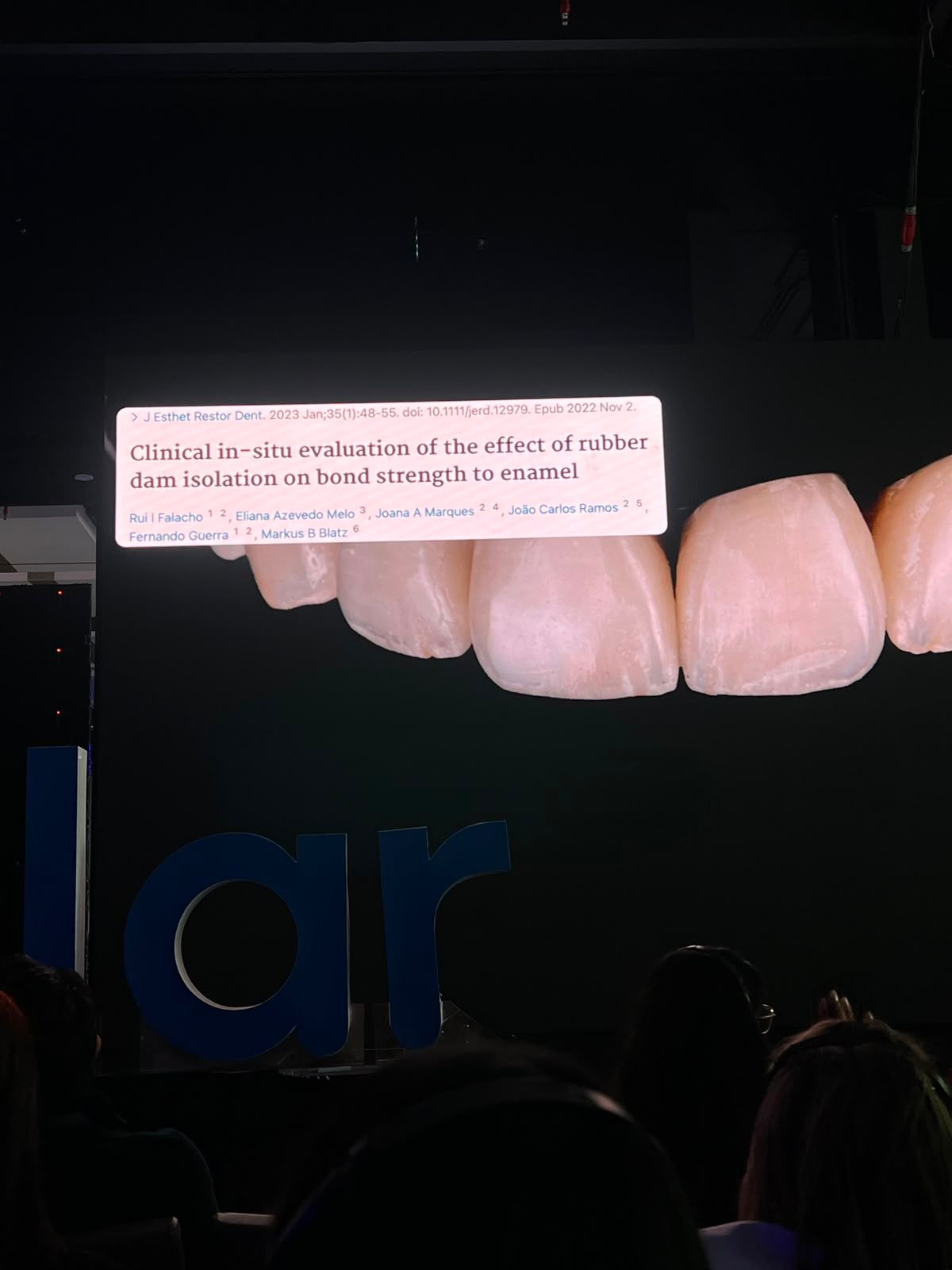
When I may consider composite resin veneers
For younger patients, and particularly when the teeth are healthy and the desired changes are relatively conservative, I often consider an additive composite approach first when the case allows it.
In some cases, we can add material without removing healthy enamel.
Composite resin also offers an important advantage: it can generally be repaired or modified more easily over time.
However, it requires maintenance. Depending on the patient, habits, bite, and restoration, composite may need polishing, repair, modification, or replacement as the years pass.
When I may consider ceramic veneers
For patients seeking greater long-term stability in color, shape, and texture, ceramic veneers can be an excellent option when properly indicated.
A well-planned, properly bonded ceramic veneer, combined with good oral hygiene, stable occlusion, appropriate habits, and regular dental care, can remain in excellent condition for many years.
Long-term clinical studies have reported high survival rates for ceramic veneers, including follow-up periods extending beyond 10 and even 20 years in appropriately selected cases.
But longevity is never determined by the ceramic alone. Diagnosis, preparation, bonding, bite, maintenance, and patient habits all matter.
Are composite veneers less sophisticated than ceramic veneers?
Not at all. In fact, direct composite veneers can be extraordinarily technique-sensitive.
A ceramic veneer is fabricated outside the mouth by a dental laboratory technician in a controlled environment, where there is time and visibility to refine shape, texture, translucency, and other details.
Direct composite veneers are different. The dentist creates the restoration directly in the patient's mouth.
That means controlling moisture and saliva while simultaneously evaluating symmetry, proportions, color, shape, and the relationship between multiple teeth.
Different composite shades, opacities, and translucencies may need to be layered individually. The material is shaped by hand and then adjusted, finished, and polished to reproduce natural dental anatomy as closely as possible.
And all of this happens while the patient is in the dental chair.
That is why I consider direct composite veneers a genuine combination of science, technique, artistry, and clinical judgment.
The material alone does not create a beautiful result. The professional using it matters enormously.
So, are ceramic or composite veneers better?
Neither material is universally better.
The better treatment is the one that achieves the patient's goals while preserving as much healthy tooth structure as reasonably possible and providing predictable function over time.
For one patient, that may mean composite resin. For another, ceramic veneers.
And for someone else, the best recommendation may be orthodontics, whitening, restorative treatment, or no veneers at all.
That is why I don't believe cosmetic dentistry should begin by asking:
"Which veneers should I get?"
A better question is:
"What is the most conservative way to achieve the result I want?"
What should you consider before getting veneers?
Before choosing a cosmetic dental treatment, don't evaluate only the material, price, or appearance of a before-and-after photograph.
Consider:
- How much natural tooth structure will be preserved?
- Why is this particular treatment being recommended?
- Is tooth preparation necessary?
- How will the treatment affect your bite?
- What maintenance will be required?
- What happens if the restoration needs repair or replacement in the future?
- Who is designing and performing the treatment?
A smile should not be evaluated only by how it looks on the day treatment is completed.
We should also think about how much healthy tooth was preserved and how that smile is likely to function and age over time.
My takeaway from the Ivoclar Symposium
The symposium reinforced something that has increasingly shaped the way I practice dentistry:
The best dentistry is not necessarily the dentistry that does the most.
It is the dentistry that achieves the best possible result while preserving as much healthy natural tissue as possible.
Technology and materials will continue to evolve. But our responsibility remains the same: diagnose carefully, choose treatments thoughtfully, and intervene only as much as each patient actually needs.
Considering veneers or cosmetic dental treatment?
If you're considering veneers, whether you live in Panama or are planning to travel here, the first step should be understanding what your teeth actually need.
During a personalized online evaluation, I can review your case, goals, photographs, and available X-rays and discuss which treatment options may be appropriate before you make a decision.
Book your online evaluation: $65
Gianna Hanly
Oral implant rehabilitation and Cosmetic Dentistry in Panama.
@giannathedentist