
Dental Veneers Step by Step: What to Expect at Every Appointment

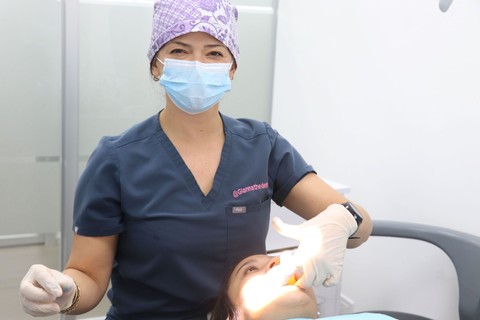
Considering dental veneers can be exciting, but it is normal to have questions when you don't know exactly what will happen at each appointment.
- Will you leave with temporary teeth?
- Can you eat normally?
- What happens if you're having both upper and lower veneers?
- How long will you wear temporaries?
- And what if your treatment also includes a dental bridge?
These are real questions patients ask me before starting treatment. Below, I'll walk you through the process so you know what to expect before making a decision.
What is the dental veneers process?
Although every treatment plan is personalized, my veneer cases generally follow four stages:
- Smile planning and evaluation
- Tooth preparation and temporary veneers
- Fabrication of the final ceramic veneers
- Final placement and follow-up
The exact number and sequence of appointments depend on how many teeth we are treating, whether we are working on the upper teeth, lower teeth, or both, and whether your case includes other restorations such as crowns or bridges.
Will I see what my new smile may look like before treatment begins?
Depending on your case, we can use photographs, digital scans, digital smile design, and physical models to plan your smile.
We can also create a mock-up, which provides a preview of the proposed shape, length, and proportions directly over your teeth.
A mock-up or digital design is a planning tool rather than a guarantee of the exact final result. All. corrections can be done over the Mock-up so we have a clear view of our final objectives. Your ceramic veneers are individually fabricated, and small adjustments may be necessary to achieve the appropriate fit, function, symmetry, and natural appearance.
Are all the teeth prepared during the same appointment?
That depends on your treatment.
If we are treating only the upper teeth, preparation and placement of the temporary veneers can often be completed during one appointment.
If we are restoring both the upper and lower teeth, I often prefer to divide the preparation into separate appointments. Comprehensive veneer treatment requires considerable precision, and extremely long appointments can become tiring for both the patient and dentist.
For example, your treatment might include:
- Appointment 1: Upper tooth preparation and upper temporary veneers
- Appointment 2: Lower tooth preparation and lower temporary veneers
- Approximately 7–14 days later: Final ceramic restoration placement
- Follow-up: Evaluation of your bite, comfort, gums, night guard delivery and any necessary adjustments
Another possibility is to complete the upper veneers before beginning treatment on the lower teeth.
There is no single sequence that is best for every patient. We decide based on your clinical needs, comfort, treatment complexity, and, particularly for patients traveling to Panama, your available time.
Will I leave the dental office with teeth?
Yes. You will not leave the office with visibly prepared teeth.
Temporary veneers are placed during the same treatment phase in which your teeth are prepared. If your case includes a dental bridge, we can generally provide a temporary restoration while the final bridge is being fabricated.
Temporary restorations serve several purposes. They protect the prepared teeth, allow you to function during the laboratory period, and give you an initial sense of the shape and proportions of your future smile.
They also provide useful clinical information. While wearing them, you can tell me how your smile feels when you speak, smile, and eat before we complete the final ceramic restorations.
How long do temporary veneers stay on?
Your temporary veneers remain in place while the dental laboratory fabricates your final ceramic restorations. This period is approximately 7–14 days, although laboratory time varies depending on the number and complexity of the restorations.
Temporaries are designed for this transitional period and are not as strong as the final ceramic veneers. Occasionally, one may loosen or fracture.
If that happens, don't try to glue it back yourself. Contact the clinic so we can evaluate it and determine whether it needs to be reattached or replaced.
Can I eat normally with temporary veneers?
Yes, but temporary veneers require some care.
A simple rule I give patients is to choose foods that can easily be cut into smaller pieces rather than biting directly into hard foods with the temporary restorations.
For example:
- Steak is generally manageable when cut into smaller pieces.
- Slice an apple instead of biting directly into it.
- Avoid nuts, ice, hard candy, and very hard or sticky foods.
- Avoid biting directly into hard or crusty foods with the temporaries.
- Never use your teeth to open packages or bite non-food objects.
You should still be able to eat comfortably; you simply need to be cautious with the temporary restorations until the final ceramics are ready.
What if I have temporary veneers on both my upper and lower teeth?
Expect a short adjustment period.
Your temporary restorations may initially feel different or slightly bulkier than your natural teeth while your lips, tongue, speech, and bite adapt.
For some patients, wearing upper and lower temporaries simultaneously makes sense. For others, completing one arch before beginning the other can make the process more comfortable.
This is one reason I don't use exactly the same treatment sequence for every patient.
What if I'm anxious about getting veneers?
Tell us before your appointment.
Dental anxiety is common, particularly during longer cosmetic procedures. Understanding exactly what will happen, how long the appointment is expected to take, and what you will experience afterward can already make the process much easier.
We can discuss appropriate comfort and anxiety-management options based on your health history and individual needs before treatment. If medication or sedation is clinically appropriate, specific instructions and safety requirements will be discussed with you directly.
What happens when the final ceramic veneers are ready?
First, we carefully remove the temporary restorations.
Before permanently bonding the ceramic veneers, we evaluate:
- Shape and length
- Color and translucency
- Fit
- Symmetry
- Bite and function
- How the restorations integrate with your face and smile
Once the restorations have been clinically evaluated and approved by me and you, they are bonded to the teeth using an adhesive protocol.
If your treatment involves many upper and lower restorations, final placement may require a longer appointment or more than one visit.
What if my treatment includes a dental bridge?
Some smile rehabilitation cases involve more than veneers.
If you have a missing tooth, for example, your treatment plan may also include a dental bridge or another type of restoration.
Bridges require additional planning and laboratory work. While the final restoration is being fabricated, a temporary bridge can generally be used to fill the space, protect the treated teeth, and maintain the appearance of your smile.
What happens after the veneers are placed?
The process doesn't necessarily end the moment your veneers are bonded.
At the follow-up appointment, we can evaluate:
- Comfort
- Speech
- Gum response
- How your bite feels during normal function
Small refinements can be part of comprehensive cosmetic treatment.
The objective isn't simply to place beautiful veneers. It is to create a smile that looks natural, feels comfortable, and functions correctly.
What do I need to do during the veneer process?
Your responsibilities are relatively simple:
- Follow the instructions for caring for temporary restorations.
- Keep your teeth and gums clean (flossers, mouthwash and proximal brushes)
- Avoid biting hard or sticky foods with your temporaries.
- Tell us if your bite feels uncomfortable or uneven.
- Contact the clinic if a temporary loosens or fractures.
- Attend your placement and follow-up appointments as scheduled.
Most importantly, you don't need to memorize the entire process.
Before each appointment, I explain what we're doing that day, what you can expect afterward, and what comes next.
How long does the entire veneer process take?
For many of my veneer cases, the clinical and laboratory process can be organized within approximately 7–14 days, but this is not a universal timeline.
The number of veneers, upper and lower treatment, additional crowns or bridges, laboratory requirements, your oral health, and your individual treatment plan can all affect timing.
If you're traveling to Panama specifically for treatment, we should establish your clinical plan before you book your trip around a specific dental timeline.
The most important thing to remember
You should never feel uncomfortable asking your dentist to explain the treatment sequence again.
Veneers are a significant decision. You deserve to understand what will happen before your teeth are treated, what is being changed, and what you can realistically expect throughout the process.
My responsibility isn't only to design your smile. It is also to make sure you feel informed, prepared, and supported from planning through final placement.
Every smile is different, which is why your exact treatment sequence can only be determined after evaluating your case.
Considering dental veneers in Panama?
Start with a personalized online evaluation with Dr. Gianna Hanly. We can review your smile, treatment goals, available photographs or X-rays, expected timeline, and whether veneers are appropriate for your case before you plan your treatment in Panama.
Book your online evaluation: $65
Gianna Hanly
Oral implant rehabilitation and Cosmetic Dentistry in Panama.
@giannathedentist